

The shift toward AI tempering
For years, achieving perfectly tempered chocolate at home felt like a skill reserved for professionals. Tempering—the process of heating and cooling chocolate to stabilize its cocoa butter—is notoriously finicky. Too hot, and it seizes. Not cool enough, and it lacks that satisfying snap and glossy sheen. But things are changing, and quickly. We’re seeing a real shift with the emergence of AI-assisted tempering.
I've watched these tools move from professional labs into home kitchens over the last year. We aren't talking about humanoid robots, but sensors that actually tell you what's happening inside the bowl. It makes professional results possible for anyone who has struggled with a double boiler.
The idea isn’t entirely new. Precise temperature control has always been key, but now AI brings a level of automation and adaptability that was previously unimaginable. Systems can now learn from data, adjust to variations in chocolate composition, and even provide real-time feedback to guide manual tempering. This isn't science fiction; it's a growing trend with practical applications for anyone who loves working with chocolate.
How cocoa butter crystals work
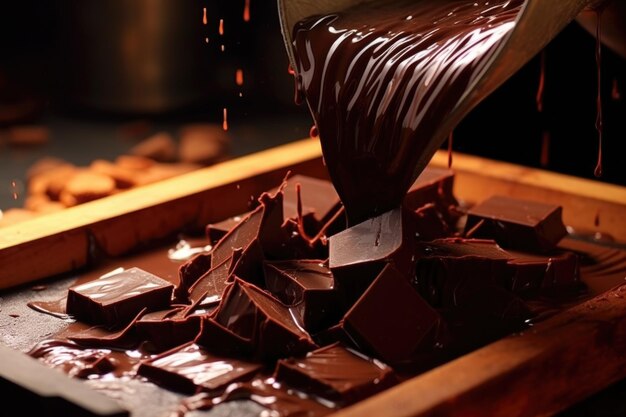
At the heart of tempering lies cocoa butter, the fat within chocolate. Cocoa butter isn't just one type of crystal structure; it can solidify into several different forms, each with unique properties. The goal of tempering is to create a predominance of Form V crystals, which are the most stable and give chocolate its desirable qualities. This is why understanding the science is so important.
Forms I through IV are less desirable, leading to bloom (that whitish coating), a grainy texture, and a dull appearance. Proper temperature control is essential to coax the cocoa butter into forming those stable Form V crystals. This involves carefully heating the chocolate to melt all crystals, then cooling it while agitating to encourage the formation of the correct structure.
Tempered chocolate is glossy and snaps when you break it. If you miss the mark, the bars stay soft and look gray. AI helps hit that narrow temperature window without the constant guesswork.
Current tools for home use
The current landscape of AI-powered tempering is diverse, ranging from fully automated machines to software-guided manual techniques. One approach is the "smart tempering machine" – these devices, like some of the offerings from companies like Chocolate Labs (though still in early access as of late 2023), incorporate built-in temperature sensors and algorithms to control the heating and cooling process automatically.
Another increasingly popular method involves smartphone apps that work in conjunction with a Bluetooth thermometer. These apps, such as TemperTech (available on iOS and Android), guide you through the manual tempering process, providing real-time temperature feedback and adjusting instructions based on your progress. These offer a lower cost entry point, but require more user involvement.
We’re also seeing experimental systems utilizing computer vision. These systems analyze the visual properties of the chocolate—its sheen and texture—to determine its tempering status. While not yet widely available, this technology holds immense promise for even more precise and adaptive tempering. I’ve seen prototypes that can even identify crystal structure visually, which is pretty incredible.
Finally, some high-end kitchen appliances are starting to integrate basic tempering functions. For example, certain KitchenAid stand mixers now offer a "chocolate tempering" setting, though these typically rely on pre-programmed temperature profiles rather than true AI.
- Smart tempering machines are fully automated but cost the most.
- App-guided kits use a Bluetooth thermometer to tell you when to stir.
- Computer Vision Systems: Experimental, highly accurate, not yet widely available.
- Integrated Appliance Functions: Convenient, limited control, suitable for basic tempering.
AI-Powered Chocolate Tempering Method Comparison (2026)
| Method | Price Range | Ease of Use | Accuracy | Chocolate Types Supported | Skill Level Required |
|---|---|---|---|---|---|
| Smart Machine | High | Medium | High | Wide - Dark, Milk, White, Ruby | Low to Medium |
| App-Guided (with external thermometer) | Medium | Medium | Medium | Common - Dark, Milk, White | Medium |
| Experimental (DIY AI/Sensor setups) | Low to High (depending on components) | Low | Limited | Limited - Primarily Dark | High |
Illustrative comparison based on the article research brief. Verify current pricing, limits, and product details in the official docs before relying on it.
How the sensors and code interact
So, how do these AI systems actually work? At their core, they rely on a combination of sensors and sophisticated algorithms. Temperature sensors are the most crucial component, constantly monitoring the chocolate's temperature and feeding that data to the system. Some systems also incorporate viscosity sensors to measure the chocolate’s thickness, providing additional insights into its structure.
The data collected by these sensors is then analyzed using machine learning techniques, often employing PID (Proportional-Integral-Derivative) control loops. PID control is a feedback mechanism that constantly adjusts the heating or cooling rate to maintain the desired temperature. The 'learning' aspect comes from the system’s ability to adapt the PID parameters based on past performance and the specific type of chocolate being tempered.
Essentially, the AI learns what works best for different chocolates and adjusts its strategy accordingly. More advanced systems might use neural networks to model the complex relationship between temperature, viscosity, and crystal formation. It's not about the machine 'knowing' what to do, but about it learning from data and optimizing the process for consistent results.
Melting Chocolate Chips: AI's Role
AI isn't just about the final tempering stage; it can be incredibly helpful even when simply melting chocolate chips. One of the biggest challenges is preventing seizing, where even a tiny drop of water can cause the chocolate to become thick and grainy. AI-powered systems can monitor temperature extremely closely, preventing overheating that can trigger seizing.
Different types of chocolate chips – milk, dark, white – require different melting temperatures and techniques. An AI system can automatically adjust the heating rate and temperature profile based on the type of chocolate you're using, ensuring a smooth, even melt. This is a huge benefit for home bakers who might not have the experience to know the subtleties of each chocolate type.
AI also stops the chocolate from scorching in the microwave. By tracking the heat in real-time, the system cuts the power before the cocoa solids burn. It's more reliable than following the generic heat-and-stir instructions found on a bag of Hershey's chips.
Troubleshooting AI Tempering
While AI-powered tempering is a significant advancement, it’s not foolproof. Sensor inaccuracies can be a common issue. Ensure your sensors are properly calibrated and clean. If you suspect a sensor is faulty, consult the manufacturer’s instructions for recalibration or replacement. Algorithm errors can also occur, particularly with newer systems still under development.
Chocolate-specific challenges can arise too. Different brands of chocolate chips vary in their composition, and some may not respond well to certain tempering profiles. Experiment with different brands and adjust the AI system’s settings accordingly. Remember that factors like humidity and ambient temperature can also affect the tempering process.
If you encounter bloom or a grainy texture, it indicates the chocolate is not properly tempered. Double-check the sensor readings and algorithm settings. If you’re using a manual app-guided system, ensure you’re following the instructions carefully and using an accurate thermometer. Resources like King Arthur Baking’s guides can also be helpful.



No comments yet. Be the first to share your thoughts!