

The Coming Wave: Why AI is About to Transform Chocolate Tempering
For decades, chocolate tempering has been the bane of many a chocolatier’s existence. It’s a process steeped in tradition, requiring a delicate touch, precise temperatures, and years of practice to master. The problem is, chocolate is incredibly sensitive. Small variations in temperature or agitation can easily throw off the process, resulting in a final product that’s dull, streaky, and lacks that satisfying snap. Achieving consistency is surprisingly hard with human hands.
The core of the issue lies in the cocoa butter within chocolate. Cocoa butter can crystallize into six different forms, but only one – Form V – gives chocolate the properties we desire: a glossy sheen, a firm snap, and a smooth melt-in-your-mouth texture. Achieving this requires carefully controlling the crystallization process, encouraging Form V crystals to develop while discouraging the others. Traditionally, this has been done through methods like tabling, seeding, and careful temperature control, all requiring a skilled operator.
This is where artificial intelligence enters the scene. AI offers the potential to automate and optimize the tempering process, removing much of the guesswork and human error. This isn't about replacing the chocolatier but providing a tool that consistently delivers perfect temper, allowing them to focus on creativity and innovation. Current tempering machines, even the automated ones, often require constant monitoring and adjustments. AI-powered systems promise a level of precision and reliability that simply isn't possible with traditional methods.
A revolution in chocolate making is coming. Recent advances in sensor technology and machine learning have made AI-powered tempering a reality, and the technology is rapidly evolving. By 2026, expect a significant shift in how chocolate is tempered, with AI systems becoming increasingly commonplace in both small artisan shops and large-scale production facilities. Consistent quality, reduced waste, and the ability to experiment with new chocolate formulations are compelling advantages.
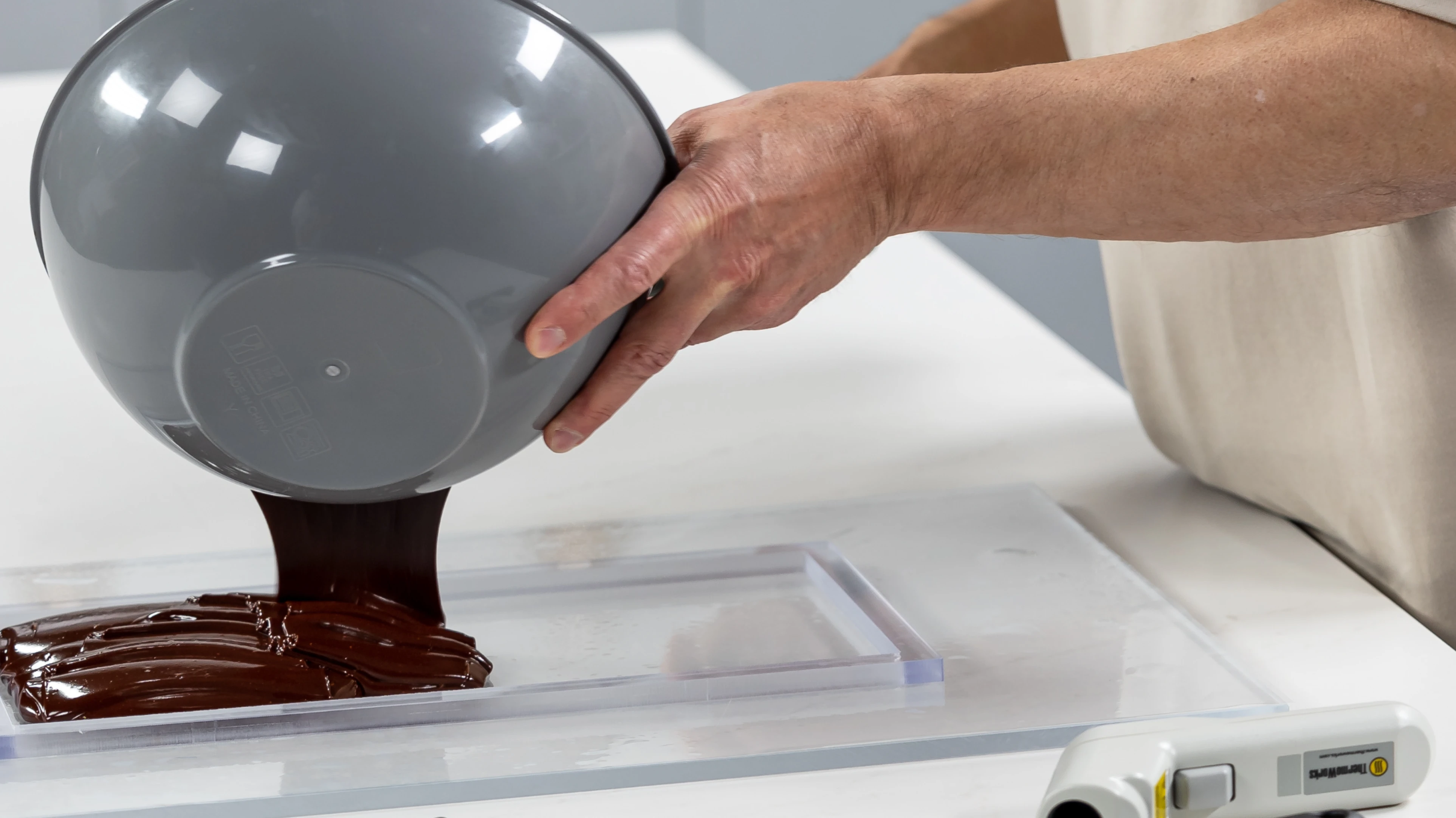
Understanding the Science: How AI ‘Sees’ and Controls Tempering
Understanding the underlying science is key to grasping how AI can revolutionize tempering. Chocolate tempering relies on controlling the formation of cocoa butter crystals. Cocoa butter can exist in six polymorphic forms – I through VI. Forms I, II, and III are unstable and result in undesirable textures like bloom or a grainy mouthfeel. Form VI is also undesirable. Forms IV and V are stable, but Form V is the holy grail of chocolate making, providing the snap, shine, and smooth texture we associate with high-quality chocolate.
Carefully controlling temperature and agitation is key to achieving Form V. The tempering process typically involves three stages: melting the chocolate to remove all existing crystals, cooling it to encourage the formation of Form V crystals, and then gently warming it to stabilize those crystals. The precise temperatures and timings for each stage depend on the type of chocolate and the desired results. Purdue University's research on cocoa processing (FS-153-W) emphasizes precise temperature control during these stages.
AI excels here. AI-powered tempering systems use a network of sensors to monitor the chocolate in real-time. These sensors can measure temperature with incredible accuracy, but increasingly, systems are incorporating other sensors as well. Viscosity sensors detect changes in the chocolate’s flow properties, offering insights into crystal formation. Some systems are even exploring the use of optical sensors to analyze the crystal structure directly.
Machine learning algorithms process data collected by these sensors. These algorithms are trained on vast datasets of chocolate tempering data, learning to predict how different parameters – temperature, agitation, cooling rate – affect crystal formation. The AI then adjusts these parameters in real-time, ensuring the chocolate remains within the optimal range for Form V crystal development. More data access improves the AI's prediction accuracy and the resulting tempered chocolate quality.
- Melting: Heating chocolate to eliminate all crystal structures.
- Cooling: Carefully reducing the temperature to initiate the formation of desirable Form V crystals.
- Warming: Gently raising the temperature to stabilize the Form V crystals and prevent the formation of unwanted forms.
Current AI Tempering Systems: A Look at What’s Emerging in 2026
A single, dominant AI tempering system has not yet emerged, but several approaches are being developed and refined. A trend towards two main types of systems is emerging: those that integrate with existing tempering machines and standalone AI tempering units. The integration approach involves retrofitting existing equipment with AI-powered sensors and control systems. This is a more cost-effective option for chocolatiers who already have a significant investment in tempering equipment.
Standalone AI tempering units are self-contained systems designed from the ground up with AI. These systems typically offer a higher level of precision and control, but they also come with a higher price tag. They often include features like automated chocolate loading and unloading, as well as advanced data logging and analysis capabilities. These will likely be favored by larger production facilities.
Software also plays a crucial role. Several companies are developing software solutions that can analyze chocolate tempering data and provide insights into optimal tempering parameters. These solutions improve the performance of both integrated and standalone systems. Some software allows for remote monitoring and control, enabling chocolatiers to manage their tempering process from anywhere.
Increasing interest exists in combining AI with other technologies. Ultrasonic sensors provide real-time information about the size and distribution of cocoa butter crystals. The AI uses this information to further refine the tempering process. Another promising area is the use of computer vision to assess the quality of tempered chocolate, identifying potential defects before they become a problem. By 2026, systems combining these technologies will likely be more common.
These systems offer clear benefits. Consistent temper, reduced waste, and the ability to temper a wider range of chocolate types are significant advantages. AI can also help chocolatiers to optimize their tempering process for specific chocolate formulations, ensuring that they consistently achieve the desired results. This is particularly important for bean-to-bar makers who often work with unique and complex chocolate blends.
Beyond Tempering: AI’s Expanding Role in Chocolate Production
While AI-powered tempering is a major step forward, it’s just the beginning of AI’s impact on the chocolate industry. The potential applications of AI extend far beyond tempering, encompassing the entire chocolate-making process, from bean to bar. A comprehensive review published by PMC (pmc.ncbi.nlm.nih.gov) highlights the expanding role of AI in the cocoa industry, covering everything from farm management to final product quality control.
In the early stages of production, AI can be used to optimize bean selection and fermentation processes. By analyzing data on bean quality, weather patterns, and fermentation parameters, AI can help farmers and processors to improve the quality and consistency of their beans. This can lead to higher yields, reduced waste, and a more sustainable supply chain.
AI is also being used to develop new chocolate formulations and flavor profiles. By analyzing data on consumer preferences and sensory attributes, AI can help chocolatiers to create chocolates that are tailored to specific tastes. This can involve identifying new flavor combinations, optimizing ingredient ratios, and even predicting the shelf life of the final product.
Quality control is another area where AI can make a significant impact. AI-powered vision systems can be used to inspect chocolates for defects, such as bloom, cracks, or inclusions. These systems can identify defects much more quickly and accurately than human inspectors, ensuring that only the highest-quality chocolates reach the market. This is especially valuable in large production facilities.
Content is being updated. Check back soon.
The Impact on Chocolatiers: Will AI Replace the Human Touch?
The question on many chocolatiers’ minds is whether AI will replace the human touch in chocolate making. I don’t believe it will. While AI can automate many of the tedious and repetitive tasks involved in tempering and other processes, it can’t replicate the creativity, artistry, and passion that a skilled chocolatier brings to the table. In fact, I see AI as a tool that empowers chocolatiers, freeing them up to focus on what they do best.
By automating the more mundane aspects of chocolate making, AI allows chocolatiers to spend more time experimenting with new flavors, developing innovative products, and creating unique customer experiences. It’s about shifting the focus from technical execution to artistic expression. AI can handle the precision, consistency, and data analysis, while the chocolatier provides the vision and the flair.
Chocolatiers who embrace AI will be well-positioned to thrive in the future. They’ll be able to produce higher-quality chocolates more efficiently, reduce waste, and respond more quickly to changing consumer demands. Those who resist AI risk falling behind. The key is to view AI not as a threat, but as an opportunity to enhance their skills and expand their creative horizons.
The artistry of chocolate making – the ability to create something truly special and memorable – will always be valuable. AI can help chocolatiers to achieve technical perfection, but it can’t replace the human element that makes chocolate so beloved around the world.
Industry Expert Perspectives on AI & Automation in Chocolate Making (Late 2023 - Early 2024)
| Expert | Platform | Key Observation | Focus Area |
|---|---|---|---|
| Amaury Guichon | X (formerly Twitter) | Expressed excitement about the potential for AI to optimize tempering processes, leading to more consistent results and reduced waste. | Tempering Consistency & Waste Reduction |
| Melissa Coppel | Highlighted the importance of human skill alongside automation, suggesting AI can handle repetitive tasks, freeing chocolatiers for creative work. | Human-AI Collaboration & Creative Focus | |
| Martin Diez | X (formerly Twitter) | Noted that current AI applications are primarily focused on quality control – identifying defects in bean processing and chocolate – rather than full automation of complex tasks like enrobing. | Quality Control & Defect Identification |
| Stephane Leroux | Discussed the potential for AI-driven predictive maintenance of tempering machines, minimizing downtime and ensuring optimal performance. | Predictive Maintenance & Machine Uptime | |
| Alice Medrich | X (formerly Twitter) | Cautioned against over-reliance on automation, emphasizing that the ‘feel’ of chocolate and nuanced adjustments still require a skilled artisan. | Artisanal Skill & Sensory Evaluation |
| David Donde | Shared articles on the use of machine learning to analyze cocoa bean flavor profiles, aiding in sourcing and blending decisions. | Cocoa Bean Sourcing & Flavor Profiling |
Illustrative comparison based on the article research brief. Verify current pricing, limits, and product details in the official docs before relying on it.
Troubleshooting AI Tempering: What Can Go Wrong (and How to Fix It)
Even with all its advantages, AI-powered tempering isn’t foolproof. Like any technology, it’s susceptible to problems. Sensor failures, algorithm errors, and data biases are all potential issues that can arise. It's important to understand these potential pitfalls and have a plan for addressing them.
Sensor failures are perhaps the most common problem. If a temperature sensor malfunctions, for example, the AI may be unable to accurately control the tempering process. Regular sensor calibration and maintenance are essential to prevent this. Algorithm errors can also occur, particularly if the AI hasn’t been properly trained or if it encounters unexpected data. Regularly updating the AI’s software and providing it with new data can help to mitigate this risk.
Data bias is a more subtle but potentially serious problem. If the data used to train the AI is biased in some way – for example, if it only includes data from one type of chocolate – the AI may not perform well with other types of chocolate. Ensuring that the training data is diverse and representative is crucial.
Finally, it’s important to remember that AI is a tool, not a magic bullet. Even with a perfectly functioning AI system, a basic understanding of chocolate tempering principles is essential. If the tempered chocolate isn’t turning out right, you need to be able to troubleshoot the problem and identify the root cause. Don’t rely solely on the AI – use your knowledge and experience to ensure the best possible results.
The Future of Smart Chocolate: Predictions and Emerging Trends
Looking ahead 5-10 years, the future of smart chocolate making is incredibly exciting. I predict we’ll see even more sophisticated AI systems that can learn and adapt to different environments and chocolate types. These systems will be able to automatically adjust their parameters based on factors like ambient temperature, humidity, and the specific characteristics of the chocolate being tempered.
The integration of AI with other technologies will also continue to accelerate. Robotics will play a larger role in automating the chocolate-making process, from bean sorting to packaging. 3D printing will allow for the creation of entirely new chocolate shapes and textures, opening up a world of possibilities for culinary innovation.
Perhaps the most intriguing trend is the potential for personalized chocolate. Imagine an AI system that can design chocolate recipes tailored to your individual preferences. By analyzing data on your taste buds, dietary restrictions, and even your mood, the AI could create a chocolate that’s perfectly suited to your needs. This is still largely speculative, but the technology is rapidly developing.
We might also see the emergence of “chocolate as a service,” where consumers can subscribe to a personalized chocolate delivery service. The AI would continuously analyze your preferences and create new and exciting chocolate formulations for you to try. The possibilities are endless. I anticipate significant advancements in sensor technology, allowing for even more precise monitoring and control of the chocolate-making process.
Ultimately, the future of smart chocolate is about creating a more efficient, sustainable, and personalized chocolate experience. AI is the key to unlocking this future, and I’m excited to see what innovations the next decade will bring.
Smart Chocolate Trends to Watch
- Precision Tempering with Machine Learning - AI algorithms are increasingly being used to analyze and predict optimal tempering curves based on chocolate type, ambient temperature, and desired bloom characteristics, leading to consistently perfect temper.
- Automated Quality Control via Computer Vision - Systems utilizing cameras and image analysis software, like those offered by Cognex, are being deployed to automatically detect defects in chocolate – bloom, scratches, inclusions – with greater speed and accuracy than manual inspection.
- Predictive Maintenance for Chocolate Equipment - AI-powered sensors and data analytics are enabling predictive maintenance on tempering machines and other chocolate processing equipment, minimizing downtime and reducing costs. Companies like Siemens offer solutions in this space.
- AI-Driven Flavor Profile Optimization - Software is emerging that uses AI to analyze flavor compounds in cacao beans and predict the resulting chocolate’s flavor profile, assisting chocolatiers in bean selection and recipe development. FlavorWiki provides tools for sensory analysis which can contribute to this process.
- Robotic Chocolate Handling & Decoration - Advanced robotics, coupled with AI-powered vision systems, are automating tasks like chocolate molding, enrobing, and intricate decoration, increasing efficiency and precision. Companies like ABB and Fanuc are key players in robotic solutions for food manufacturing.
- Enhanced Traceability with Blockchain Integration - Combining AI with blockchain technology allows for end-to-end traceability of cacao beans, from farm to finished product, ensuring ethical sourcing and quality control. Platforms like IBM Food Trust are being explored for this application.
- Real-time Data Analytics for Process Optimization - AI algorithms analyze data from various stages of chocolate production – roasting, conching, tempering – to identify areas for process improvement and optimize resource utilization, leading to higher yields and reduced waste.


No comments yet. Be the first to share your thoughts!