
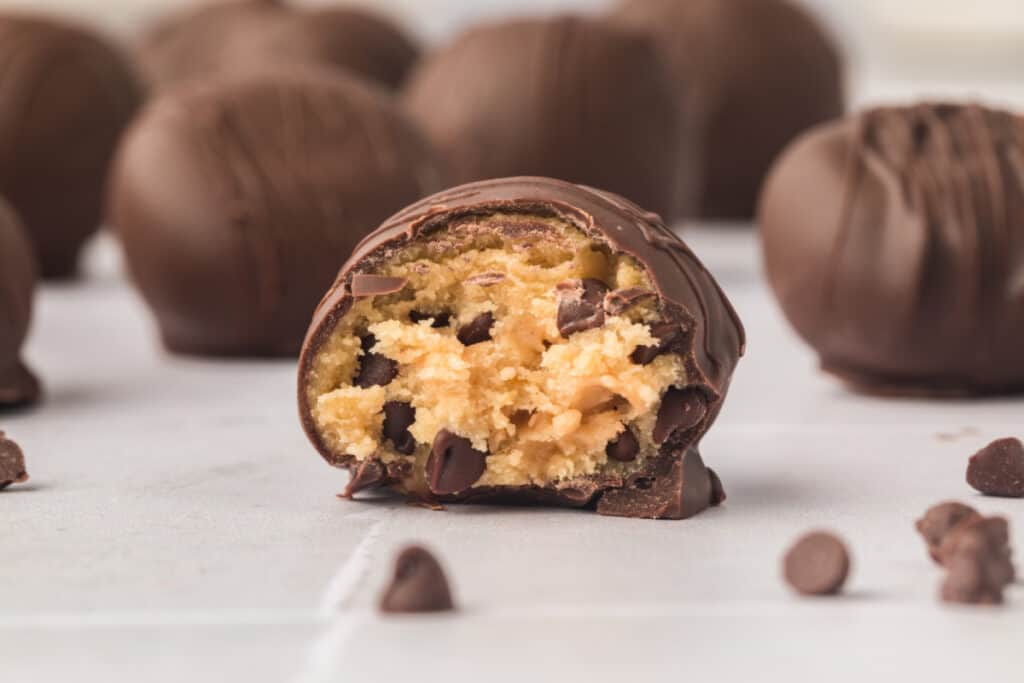

Why homemade truffle chocolate beats store-bought
Making truffle chocolate at home gives you control over every element of the final product. Store-bought versions often rely on stabilizers and preservatives to extend shelf life, which dulls the distinct flavor of the cocoa. When you prepare truffles yourself, the ganache remains soft and glossy, melting cleanly on the tongue without the waxy aftertaste common in mass-produced confections.
Ingredient quality is another major advantage. Commercial truffles frequently substitute high-quality couverture chocolate with compound coatings or vegetable fats to cut costs. By buying good chocolate and fresh cream, you ensure that the truffle chocolate tastes like actual chocolate, not sugar and fat. This is especially noticeable when coating the ganache in cocoa powder or nuts, where purity matters.
Cost savings are significant, too. Premium boxed truffles carry a heavy markup for packaging and brand prestige. Homemade batches cost a fraction of the price per piece. You can experiment with different flavors—adding espresso, citrus zest, or liqueur—without paying for specialized artisanal labels.
The process is straightforward and requires only a few basic tools. Once you master the ratio of chocolate to cream, creating truffle chocolate becomes a reliable routine. You gain the satisfaction of crafting a luxury treat that rivals the best chocolatiers, all while keeping the recipe simple and accessible.
Gather the ingredients
Making truffle chocolate starts with three simple components. You don't need a pantry full of exotic spices, but you do need quality basics. The difference between a gritty, dry bite and a melt-in-your-mouth truffle comes down to the ratio and quality of these few items.
Chocolate
The chocolate is the foundation of your truffle chocolate. Use high-quality chocolate chips or, even better, finely chopped baking bars. Bars often contain less stabilizer than chips, resulting in a smoother ganache. Avoid cheap candy melts if you want a rich, authentic flavor. The fat content in real chocolate is what gives the truffle its creamy structure once it cools.
Heavy Cream
Heavy cream (also called whipping cream) provides the moisture and fat that emulsifies with the chocolate. It creates the ganache center. Use cream with at least 35% fat content. Lower-fat creams can make the truffles grainy or cause the chocolate to seize. The cream should be heated until it just begins to simmer before pouring it over the chocolate.
Coatings
Once the ganache is set, you roll the truffles in coatings for texture and presentation. Common options include cocoa powder, finely chopped nuts, or additional melted chocolate. Cocoa powder gives a classic, slightly bitter contrast to the sweet ganache. Nuts add crunch. You can also dip them in tempered chocolate for a shiny snap. Choose coatings that complement the chocolate type you used in the ganache.
Melt chocolate chips for smooth ganache
The foundation of any good truffle chocolate is a silky, glossy ganache. This requires melting chocolate chips gently so they don't seize or become grainy. The goal is to create a smooth emulsion between the chocolate and warm cream. Rushing this step with high heat will break the emulsion, leaving you with a curdled mess that is difficult to salvage.
Use a double boiler or the microwave method, but prioritize patience over speed. Low, indirect heat preserves the cocoa butter's structure, ensuring the final truffle chocolate has that luxurious, melt-in-your-mouth texture. Here is how to do it correctly.
Chill and shape your truffle centers
The ganache must set completely before you can shape it. If the mixture is too warm, it will smear instead of holding its form, turning your truffle chocolate into a sticky mess. Place the bowl in the refrigerator for at least two hours, or until the surface feels firm to the touch but the center remains soft enough to scoop.
You can test the consistency by pressing a finger lightly into the ganache. It should leave a clean indentation without sticking to your skin. If it feels liquid or tacky, give it more time. This firm-but-scoopable texture is the sweet spot for rolling.
Roll into uniform spheres
Once the ganache is set, scoop out portions using a small melon baller or a teaspoon. Roll each portion between your palms using gentle, circular motions. The heat from your hands helps smooth out any cracks and creates a tight, round shape. Work quickly to keep the chocolate from melting, and place the finished balls on a parchment-lined tray.
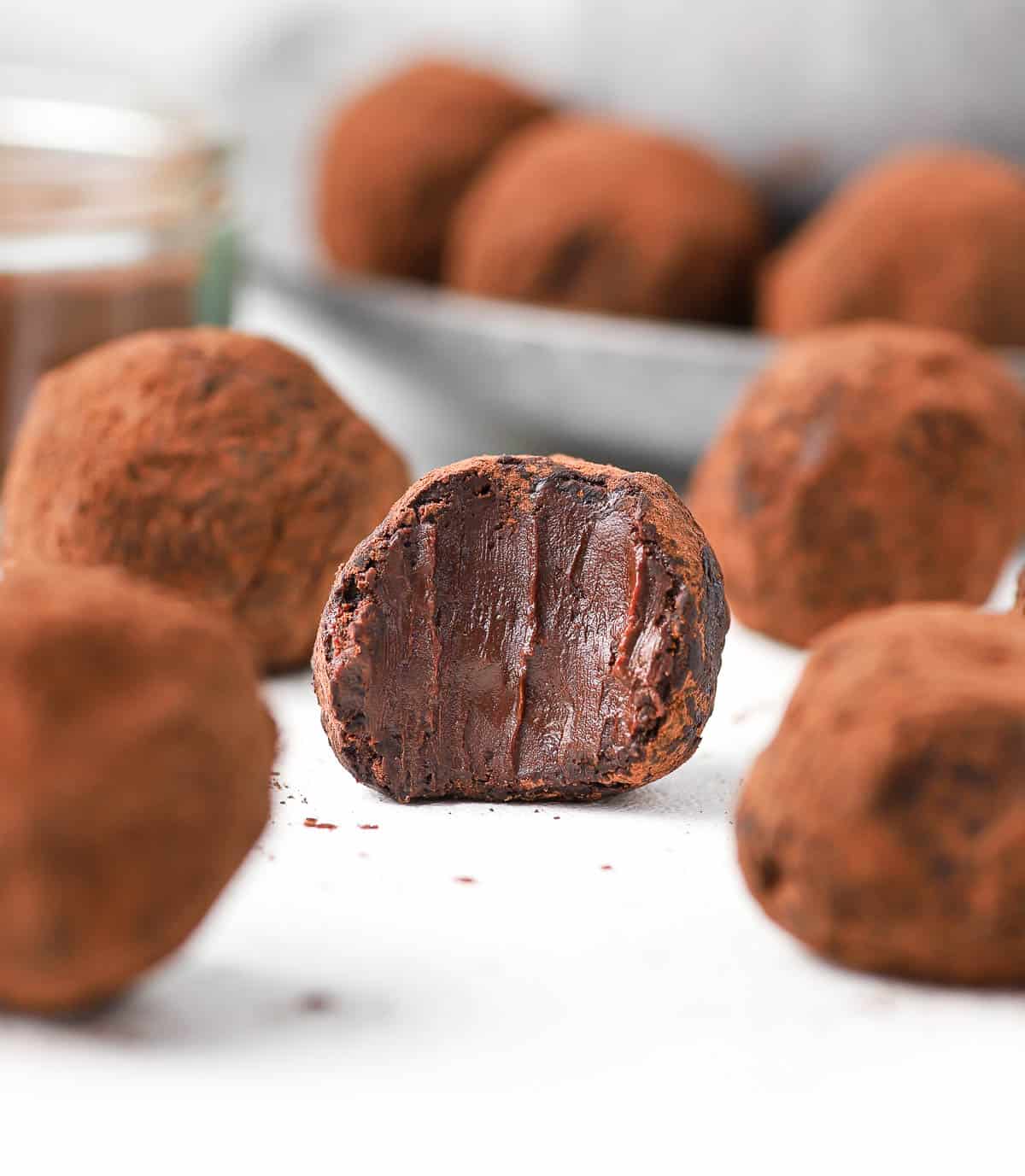
Refrigerate the ganache for at least two hours. Check for firmness by pressing a finger into the surface; it should hold its shape without sticking.
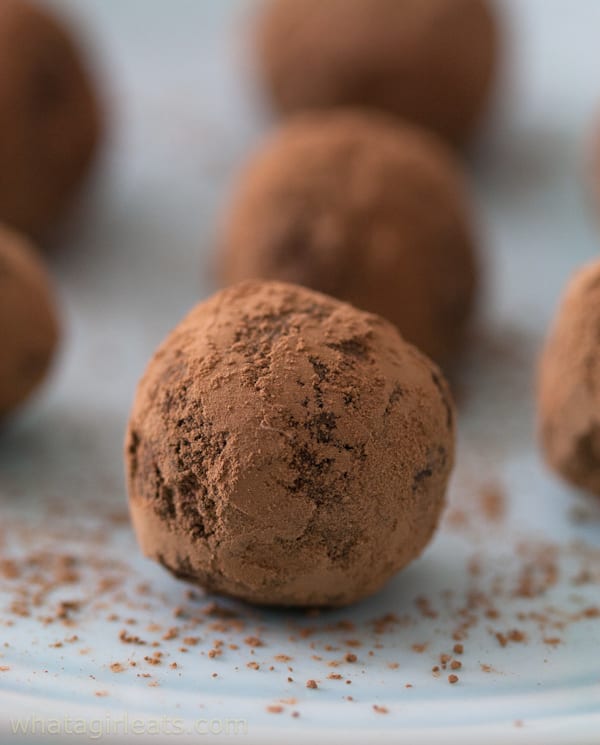
Use a small spoon or melon baller to portion the ganache. Keep the portions consistent in size for even rolling and coating.
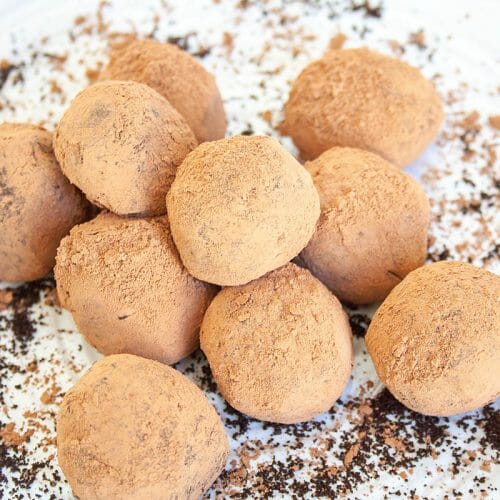
Gently roll each ball between your palms. The warmth smooths the surface and creates a tight, uniform sphere. Place finished truffles on parchment paper.
Troubleshooting texture issues
If the ganache is too hard to roll, let it sit at room temperature for five to ten minutes. If it is too soft, return it to the refrigerator for fifteen minutes. Keep your hands clean and dry to prevent the chocolate from absorbing moisture, which can cause the truffle chocolate to seize.
Coating and finishing your truffle chocolate
The final step in making truffle chocolate defines its texture and appearance. You can choose from three classic finishes: dipping in tempered chocolate for a crisp shell, rolling in cocoa powder for a rustic look, or coating in chopped nuts for crunch.
Dipping in chocolate
For a smooth, glossy finish, dip each chilled truffle into melted chocolate using a fork. Lift it out, let the excess drip off, and place it on parchment paper. This method creates a professional-looking shell that snaps when bitten.
Rolling in cocoa powder
A traditional truffle chocolate is often rolled in unsweetened cocoa powder. This creates a velvety, matte exterior that contrasts with the soft ganache inside. Simply toss the chilled balls in a shallow dish of cocoa powder until evenly coated.
Adding nuts or other textures
For added crunch, roll the truffles in finely chopped pistachios, hazelnuts, or toasted coconut. Press the nuts gently onto the surface to ensure they stick. This adds visual interest and a satisfying textural contrast to the smooth center.
Troubleshooting Common Truffle Chocolate Mistakes
Even experienced chocolatiers encounter hiccups when making truffle chocolate at home. The most frequent issues involve texture and stability, but each has a straightforward fix that saves the batch.
Grainy Texture
Graininess usually stems from sugar crystals forming in the ganache or overheating the chocolate. If your mixture feels gritty, return it to low heat and stir in a teaspoon of warm heavy cream. This re-emulsifies the fats and smooths the crystals. Always temper your chocolate gently over a double boiler rather than microwaving it directly, which creates hot spots that ruin the smoothness.
Soft Centers
Soft centers often mean the ganache didn’t set long enough or the ratio of cream to chocolate was too high. If your truffles are too soft to roll, chill the entire batch in the refrigerator for 30 minutes. Once firm, scoop and roll them again. To prevent this in the future, ensure you are using a standard 2:1 ratio of chocolate to cream for dark chocolate truffles, which provides enough structure to hold their shape.
Separated Ganache
A broken or separated ganache looks curdled and oily. This happens when the chocolate is shocked by too-hot cream. To rescue it, add a tablespoon of room-temperature heavy cream and whisk vigorously until the emulsion reforms. The fats will rebind, creating a glossy, smooth consistency. If the separation is severe, you may need to start over, ensuring the cream is warm but not boiling before pouring it over the chocolate.
Storing and serving truffle chocolate
How you store your truffle chocolate determines whether it stays creamy or turns grainy. Because homemade truffles lack commercial preservatives, they have a much shorter shelf life than store-bought versions. Treat them like fresh pastry: keep them cool, dry, and sealed.
Refrigeration vs. room temperature
Store truffles in an airtight container lined with parchment paper. If your kitchen is cool (below 68°F / 20°C), you can keep them at room temperature for up to 3 days. For longer storage, refrigerate them for up to 2 weeks. Always let refrigerated truffles sit at room temperature for 15 minutes before serving to restore their soft, melt-in-your-mouth texture.
Serving suggestions
Serve truffle chocolate on a chilled plate to maintain their shape. Pair them with black coffee, espresso, or a dry red wine to balance the richness. For a visual treat, arrange them in a single layer on a slate board.
Storage checklist
- Use an airtight container to prevent moisture absorption.
- Layer truffles with parchment paper to stop sticking.
- Keep refrigerated truffles in the main compartment, not the door.
- Bring to room temperature before serving for best texture.
Frequently asked questions about truffle chocolate
Why are truffle chocolates so expensive?
The high price tag on truffle chocolate usually comes down to the ganache filling. While the name shares a root with the rare underground fungus, the confection’s cost is driven by quality ingredients and labor. Traditional truffles require a precise chocolate ganache—often made with high-cocoa butter chocolate and heavy cream—that must be chilled, rolled by hand, and coated. This small-batch process is far more time-intensive than mass-producing standard candy bars.
Can I use milk chocolate chips to make truffles?
You can use milk chocolate chips, but the result will be softer and sweeter than the classic dark chocolate version. Milk chocolate has a higher sugar content and less cocoa butter than couverture chocolate, which can make the ganache harder to set firmly. For the best texture, we recommend using high-quality dark chocolate bars that melt smoothly. If you stick with chips, ensure your cream ratio is slightly higher to prevent the mixture from becoming too stiff or grainy.
How long do homemade truffles last?
Homemade truffle chocolate has a shorter shelf life than store-bought candy because it lacks preservatives. When stored in an airtight container in the refrigerator, they typically last about one to two weeks. For longer storage, you can freeze them for up to three months. Always let them come to room temperature before eating to restore their creamy texture and full flavor profile.
No comments yet. Be the first to share your thoughts!