

Start with the right chocolate
The quality of your truffles depends entirely on the chocolate you choose. Using the wrong base leads to grainy textures or seized batches that cannot be saved. For a professional result, stick to chocolate chips or bars specifically designed for melting. Avoid standard baking chips, which contain stabilizers that prevent a smooth, glossy finish.
Look for chips with at least 30% cocoa butter. This fat content acts as the lubricant that allows the chocolate to flow like liquid silk when heated. If the cocoa butter content is too low, the chocolate will remain stiff and thick, making it impossible to coat truffles evenly. Brands like Choco Harvest prioritize this ratio to ensure a clean melt every time.
Check the ingredient list for purity. The best melting chocolate lists cocoa mass, sugar, and cocoa butter as the only ingredients. Avoid products with vegetable oils or palm kernel oil, which create a waxy coating on the palate. A pure chocolate bar chopped into small pieces works just as well as chips, provided it is high-quality couverture or baking chocolate.
Melt chocolate gently in the microwave
Microwaving chocolate chips is the fastest way to get them smooth and pourable, but it requires patience. Chocolate burns easily because the sugar and cocoa solids heat up faster than the fat. If you leave it unattended, you will end up with a grainy, scorched mess that cannot be fixed.
The secret is short bursts and frequent stirring. Think of the microwave as a gentle warmer, not a cooker. You are not trying to melt the chocolate instantly; you are trying to raise the temperature slowly so the crystals relax and flow.
Place your chocolate chips in a dry, microwave-safe bowl. Any water droplets will cause the chocolate to seize, turning it into a hard, lumpy mass. If you are using a large quantity, spread the chips out evenly so they heat uniformly.
Set your microwave to 50% power. Heat the chips for just 10 seconds at a time. High power is the enemy of smooth chocolate; it creates hot spots that scorch the edges while the center remains solid. Lower power gives you control.
Take the bowl out after every 10 seconds and stir vigorously with a dry spatula. This distributes the heat and prevents the bottom layer from burning. You will notice the chips start to look glossy and loose even before they are fully melted. This is called residual heat.
Remove the bowl from the microwave when there are still a few small unmelted bits visible. Let the bowl sit for 30 seconds, then stir again. The residual heat will finish melting the remaining chunks without overheating the chocolate. If it is still too thick, repeat the 10-second cycle one more time.
Once smooth, your melted chocolate is ready for dipping or molding. If you notice it has become too thick or stiff, you can thin it slightly by adding a tiny amount of coconut oil or vegetable shortening, but avoid adding water or dairy unless your truffle recipe specifically calls for it.
Prepare the ganache base
The heart of any truffle is the ganache, a smooth emulsion of melted chocolate and warm cream. Think of this step like making mayonnaise: you are forcing two liquids that naturally repel each other to bond into a stable, creamy structure. If you rush or add the cream too quickly, the mixture will split into oily chocolate and watery milk, leaving you with a grainy mess that won't set.
To start, place your finely chopped chocolate chips or broken chocolate bars into a heatproof bowl. The finer the chop, the more evenly the chocolate will melt, ensuring a silky texture without any gritty chunks. For best results, aim for a consistency similar to coarse sand. If you are using whole chocolate bars, pulse them in a food processor until they resemble small pebbles.
Heat your heavy cream in a small saucepan over medium-low heat. You are looking for a gentle simmer, not a rolling boil. Small bubbles should form around the edges, and steam should rise steadily. If the cream boils too vigorously, it can scorch or separate from the fat, which affects the final mouthfeel. Remove the pan from the heat immediately once you see those bubbles.
Pour the hot cream directly over the chopped chocolate. Do not stir yet. Let the bowl sit undisturbed for five minutes. This resting period allows the residual heat to gently melt the chocolate from the inside out, softening the cocoa butter without risking the emulsion. This patience is what separates a professional ganache from a lumpy one.
After five minutes, use a silicone spatula to gently stir the mixture. Start in the very center of the bowl where the chocolate is softest, making small circular motions. Slowly widen your circles as you incorporate the cream from the edges. Keep the spatula angled against the side of the bowl to push the chocolate into the cream, rather than just swirling the liquid on top.
Continue stirring until the ganache is completely smooth, glossy, and uniform in color. There should be no visible streaks of white cream or unmelted chocolate bits. If you see any small lumps, you can place the bowl over a pot of barely simmering water (bain-marie) for ten seconds, stirring constantly, to melt them out. Be careful not to overheat it.
Once the emulsion is perfect, stir in any flavorings like vanilla extract, liqueur, or citrus zest. If you are using butter, add it now while the ganache is still warm so it melts into the mix. Cover the bowl with plastic wrap, pressing the wrap directly onto the surface of the ganache to prevent a skin from forming. Let it cool at room temperature or in the refrigerator until it reaches a spreadable, fudge-like consistency.
Shape and cool the truffles
The ganache needs to firm up enough to handle, but not so hard that it cracks. If the center is still too soft, chill the tray for another 15 minutes. If it’s too hard and crumbles, let it sit at room temperature for a few minutes until it becomes pliable.
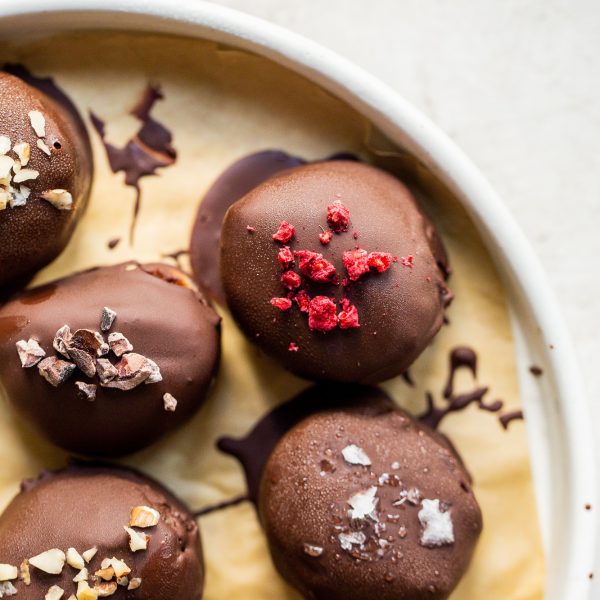
Use a small cookie scoop or a teaspoon to portion the ganache. Uniform sizes ensure they all set at the same rate and look professional when finished. Place each portion on a parchment-lined tray, leaving a little space between them so they don’t stick together.
Dust your hands lightly with cocoa powder or powdered sugar to prevent sticking. Pick up a portion and gently roll it between your palms. Use a light touch; you want a smooth, round shape, not a tight, dense ball. If the ganache gets too warm and sticky, pop the tray back in the fridge for five minutes to reset.
Once all the truffles are rolled, place the tray in the refrigerator for 20 to 30 minutes. They are ready when they feel firm to the touch but still yield slightly. This cooling step is essential for holding their shape during the final coating process. Avoid freezing them, as rapid temperature changes can cause condensation and affect the finish.
Fix common melting mistakes
Even experienced makers run into texture issues when melting chocolate chips. The two most frequent problems are seizing and graininess. Both are usually caused by water or uneven heat, and both can be fixed with a few simple adjustments.
Fix seized chocolate
Seizing happens when a tiny amount of water touches the melting chocolate, causing the cocoa solids to clump into a gritty paste. This often occurs if your bowl isn't completely dry or if steam from a double boiler drips into the mix.
Prevent grainy texture
A grainy texture usually means the chocolate wasn't melted slowly enough. High heat scorches the cocoa butter, leaving behind a sandy mouthfeel. Always use low, indirect heat and stir constantly to distribute warmth evenly.
If the chips are still gritty after melting, you can rescue them by adding a small amount of warm cream or butter. Stir until the fat coats the particles, smoothing out the texture for your truffle filling.
No comments yet. Be the first to share your thoughts!