

The AI Flavor Revolution
I recently spoke with Anya Petrova, a chocolatier in Brooklyn, who told me she almost dismissed the email. "AI-designed chocolate?’ she asked herself. ‘What could a computer possibly know about pleasure?’ But curiosity, and a slow sales month, prompted her to try the flavor profiles a new software platform suggested. Now, her lavender-infused dark chocolate truffle is her best seller. This isn"t a singular experience; a quiet revolution is underway in the world of chocolate making, driven by artificial intelligence.
For decades, flavor development has been the realm of experienced palates and countless hours of experimentation. But now, AI is entering the scene, offering a new approach to crafting delicious and unexpected flavor combinations. The appeal is simple: speed and the potential to unlock pairings no human would ever conceive of. It’s not about replacing chocolatiers, but providing them with powerful new tools.
The core idea is to leverage the power of machine learning to analyze vast amounts of data and identify patterns that humans might miss. This technology is being used to predict consumer preferences, optimize existing recipes, and even create entirely new flavor profiles. It's a shift that promises to redefine what we consider 'good' chocolate, and it's happening faster than many realize. We’re seeing early adoption now, but expect it to be widespread by 2026.
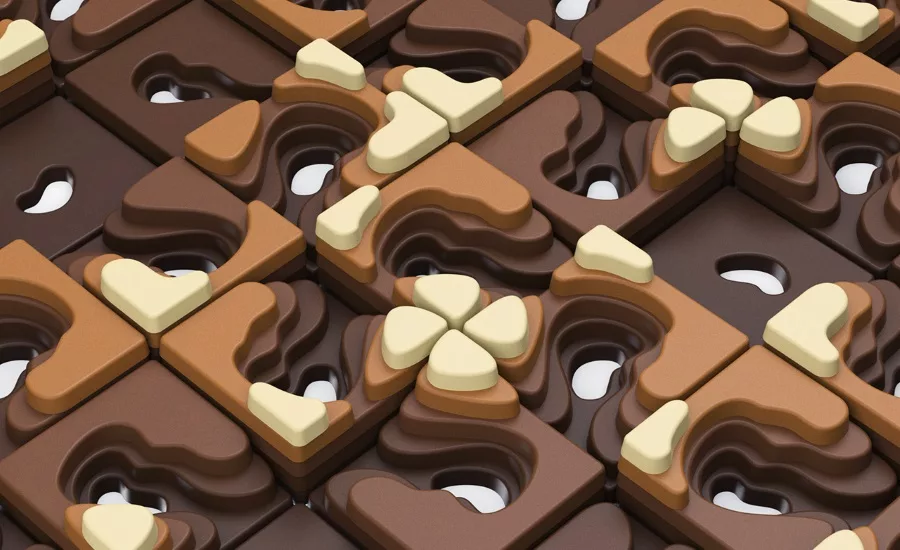
Flavor Pairing: Beyond Human Intuition
Traditional flavor pairing relies heavily on a chocolatier’s training, experience, and intuition. Years of tasting, blending, and refining are essential. But this process is limited by the scope of human experience. AI, on the other hand, can analyze data from sources far beyond any single person’s palate. It examines the chemical compounds in different ingredients, how those compounds interact with each other, and how those interactions are perceived by the human brain.
The algorithms work by identifying "flavor networks’ – complex relationships between different flavor compounds. For example, AI might discover that a compound found in smoked paprika shares similarities with compounds in certain types of white chocolate, suggesting a surprisingly harmonious pairing. We"ve seen chocolatiers begin to experiment with combinations like white chocolate with smoked paprika, or dark chocolate paired with black garlic – flavors that would have seemed unthinkable just a few years ago.
This isn’t about random combinations, though. The AI isn’t simply throwing ingredients together. It’s making calculated predictions based on scientific data and consumer feedback. A company called FlavorGraph, for instance, uses network science to map flavor relationships, identifying ingredients that are likely to pair well together. They’ve found success predicting ingredient combinations that chefs and food scientists had not yet explored.
The difference is significant. A chocolatier might pair raspberry with dark chocolate because it’s a classic combination. AI might suggest pairing dark chocolate with sea buckthorn – a tart, citrusy berry – because its chemical profile complements the chocolate in a way that enhances both flavors. It’s about pushing boundaries and discovering new dimensions of taste.
- White chocolate & Smoked Paprika: A surprising contrast of sweet and smoky.
- Dark chocolate & Black Garlic: Umami-rich and unexpectedly delightful.
- Milk chocolate & Szechuan Peppercorns: A tingling sensation with a sweet base.
🎄 AI just gave chocolate-making a festive upgrade. 🍫✨
— Pascal Bornet (@pascal_bornet) December 24, 2025
This AI-powered delta robot is redefining precision manufacturing — starting with pralines. Instead of chasing the chocolates, it sees, thinks, and adapts in real time.
Guided by computer vision, its base moves to align… pic.twitter.com/t9bQwz4lZc
The Data Behind the Deliciousness
The effectiveness of AI in flavor development hinges on the quality and breadth of the data it uses. These algorithms aren’t pulling flavors out of thin air; they’re learning from existing knowledge. A significant portion of the data comes from scientific literature detailing the chemical composition of various ingredients – identifying the hundreds of volatile compounds that contribute to flavor.
But the data isn’t limited to scientific studies. Consumer reviews, sales data, and even social media trends are also valuable sources of information. Analyzing what people are saying about different flavor combinations online can provide insights into consumer preferences. For example, tracking mentions of 'chocolate' and 'sea salt' on Twitter might reveal a growing interest in salty-sweet pairings.
Machine learning algorithms then sift through this data, identifying patterns and predicting which flavor combinations are most likely to be successful. However, it’s important to acknowledge the limitations. Data can be biased – reflecting the preferences of specific demographics or regions. Incomplete data can lead to inaccurate predictions. If the dataset primarily focuses on European palates, the AI might struggle to create flavors that appeal to consumers in Asia.
Traditional vs. AI-Driven Flavor Development for Truffle Chocolate - A Comparative Assessment
| Criteria | Traditional Flavor Development | AI-Driven Flavor Development |
|---|---|---|
| Cost | Generally higher due to extensive ingredient sourcing, skilled labor, and iterative testing. | Potential for cost reduction through optimized ingredient combinations and reduced trial-and-error. |
| Speed to Market | Can be lengthy, requiring multiple rounds of recipe development, sensory evaluation, and refinement. | Significantly faster, with AI algorithms capable of generating and predicting flavor profiles in a compressed timeframe. |
| Novelty of Flavors | Relies on established flavor pairings and the creativity of chocolatiers; innovation often incremental. | Capable of identifying unexpected and unique flavor combinations that might not be considered through traditional methods. |
| Risk Assessment | Flavor success is often based on experience and intuition, carrying a higher risk of unsuccessful flavor profiles. | AI can predict consumer preference and identify potential off-notes, reducing the risk of creating undesirable flavors. |
| Scalability | Scaling requires replicating the expertise of individual chocolatiers, which can be challenging. | Highly scalable, as AI models can be easily deployed and used to generate flavor options for large-scale production. |
| Reliance on Expertise | Heavily dependent on the knowledge, skill, and sensory evaluation capabilities of experienced chocolatiers. | Reduces, but does not eliminate, the need for expert chocolatiers; requires individuals to interpret AI outputs and refine formulations. |
| Ingredient Sourcing | Requires sourcing ingredients based on availability and established supply chains. | Can suggest alternative ingredients based on flavor profile needs, potentially opening up new sourcing opportunities. |
Illustrative comparison based on the article research brief. Verify current pricing, limits, and product details in the official docs before relying on it.
Truffle Chocolate: A Perfect Testbed
Truffle chocolate, with its relatively simple composition, presents an ideal environment for experimenting with AI-designed flavors. Unlike complex chocolate bars with multiple layers and inclusions, a truffle’s rich, smooth base allows subtle flavors to truly shine. The higher fat content in a truffle also acts as a carrier for flavor compounds, enhancing their impact.
Historically, truffle chocolate has always been associated with luxury and innovation. Originating in the late 19th century, truffles were initially a way for chocolatiers to showcase their skills and use the finest ingredients. They quickly became a symbol of indulgence and sophistication. This legacy of experimentation makes truffle chocolate a natural fit for the cutting edge of flavor development.
Furthermore, truffles are often produced in smaller batches than other chocolate products, allowing chocolatiers to more easily test new flavor combinations without significant financial risk. It’s a lower-stakes environment for innovation – a place to explore the possibilities without committing to large-scale production runs. LINDT USA currently offers a wide variety of truffles, showing the market's existing appetite for diverse flavors.
Chocolatiers and the Algorithm
The reaction from chocolatiers to AI-designed flavors has been mixed, but increasingly positive. Initially, some viewed the technology with skepticism, fearing it would diminish the artistry of chocolate making. However, many are now recognizing AI as a powerful tool that can augment their skills and unlock new creative possibilities.
Anya Petrova, the chocolatier I spoke with earlier, initially worried that AI would make her work feel impersonal. But she quickly realized that the algorithms weren’t dictating flavors; they were offering suggestions. "It’s like having a really knowledgeable assistant,’ she said. ‘It frees me up to focus on the artistry – the texture, the presentation, the overall experience."
Skills like sensory evaluation, recipe development, and understanding the nuances of flavor are becoming more important, not less. Chocolatiers need to be able to critically assess the AI’s suggestions and refine them based on their own expertise. It’s a collaborative process, a partnership between human creativity and artificial intelligence. The ability to interpret data and translate it into delicious chocolate will be a defining characteristic of successful chocolatiers in the years to come.
Content is being updated. Check back soon.
DIY: AI-Inspired Flavor Combinations
Want to experiment with AI-inspired flavors at home? Here’s a basic truffle recipe and a few flavor combinations to get you started. This isn’t about perfectly replicating an AI algorithm, but about embracing the spirit of experimentation and trying something new.
Basic Truffle Recipe: Combine 8 ounces of high-quality dark chocolate (70% cacao) with 1/2 cup of heavy cream. Heat gently until melted and smooth. Stir in 2 tablespoons of softened butter. Refrigerate for at least 2 hours. Once chilled, roll into small balls and coat with cocoa powder, chopped nuts, or sprinkles.
Now, let’s incorporate some AI-inspired flavors. Here are a few suggestions:
Rosemary & Dark Chocolate: Infuse the heavy cream with a sprig of fresh rosemary before melting it with the chocolate. The herbaceous aroma complements the dark chocolate beautifully.
Chili & Milk Chocolate: Add a pinch of cayenne pepper to the melted chocolate mixture. Start with a small amount and adjust to your preference. The heat adds a surprising kick.
Earl Grey & White Chocolate: Steep a few Earl Grey tea bags in the heavy cream before melting it with the white chocolate. The floral notes of the tea pair wonderfully with the sweetness of the white chocolate.
- Melt 8oz dark chocolate with 1/2 cup heavy cream.
- Stir in 2 tbsp softened butter.
- Refrigerate for 2+ hours.
- Roll into balls and coat as desired.
Looking Ahead: 2026 and Beyond
By 2026, we can expect AI to play an even more significant role in the world of truffle chocolate. The technology will likely become more sophisticated, capable of designing even more complex and nuanced flavor profiles. We might even see AI algorithms that can predict how different flavors will interact with individual taste receptors.
The possibility of personalized chocolate is also on the horizon. Imagine an AI system that analyzes your genetic makeup and preferences to create a truffle flavor tailored specifically to you. It sounds like science fiction, but the technology is rapidly advancing. The data required for this level of personalization is still a challenge, but it’s not insurmountable.
However, we must also consider the ethical implications of AI-designed food. Will these algorithms prioritize taste over nutrition? Will they perpetuate existing biases in flavor preferences? These are important questions that need to be addressed as the technology evolves. I’m not sure about the long-term implications, but it’s crucial to have these conversations now, ensuring that AI is used responsibly and ethically in the pursuit of delicious chocolate.

No comments yet. Be the first to share your thoughts!